From a construction finance perspective, installation delays often look like field problems. Labor runs long, schedules slip, and productivity misses the estimate. On paper, the cause usually appears downstream, at the jobsite. In practice, many of these costs are created much earlier.
As prefab and modular construction become more common, installation readiness is increasingly decided before materials ever reach the field. Warehouses and staging yards now play a direct role in whether crews install on schedule or stand idle. The issue is rarely that materials are missing. More often, they are almost right. That distinction has real financial consequences for companies.
Prefab changes how risk shows up in a construction project. When work was primarily built in the field, small discrepancies could often be absorbed without stopping progress. Crews adjusted, workarounds happened, and the cost impact blended into general productivity loss. Prefab concentrates that risk. When an assembly does not match the intended installation, work does not slow down. It stops.
From a cost standpoint, the materials are already purchased. Labor is already mobilized. Equipment is already on site. The only thing missing is certainty that what arrived is actually installable.
This is where many installation-related cost overruns begin. Panels built to an earlier revision. Racks configured for a different location. Assemblies that meet the purchase order but not the install intent. Individually, these issues can look minor. Collectively, they lead to lost labor hours, rescheduled crews, expedited shipments, and schedule extensions that never tie cleanly back to a single decision. For finance teams, these impacts often surface as unexplained variance.
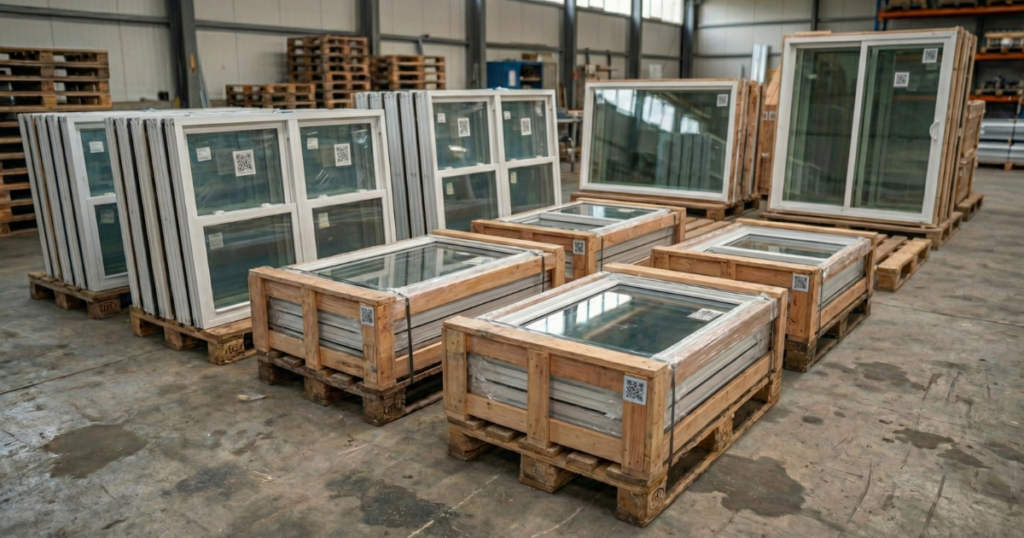
Job-specific prefabricated materials are notoriously hard to track. Unlike bulk items, prefab assemblies come in multiple versions tied to specific locations or revisions. Once they leave the fabricator, small differences can get lost in warehouses or staging yards, and traditional tracking systems that are focused on quantity and cost often miss these critical variations.
Most material tracking in construction is designed to answer accounting questions. Do we have it? How many? Where is it? Those answers are necessary, but they no longer capture the full risk profile of prefab work. Two assemblies can carry the same cost, description, and inventory status while producing very different installation outcomes.
When multiple variations are not explicitly tracked and verified, readiness is assumed instead of confirmed. That assumption shifts risk downstream, where it is most expensive to manage.
Construction companies seeing the most predictable project performance are changing how they define installation readiness. Materials are not considered ready simply because they have been received or counted. They are considered ready only after the correct variation has been verified against the intended installation and physically confirmed before labor is committed.
This approach moves cost control upstream. Verification happens in the warehouse, where labor is cheaper, schedules are more flexible, and problems can be resolved without disrupting field operations. Instead of absorbing the cost of interruption in the field, organizations address issues earlier, when the financial impact is smaller and more controllable.
That upstream verification increasingly depends on simple, repeatable checks rather than tribal knowledge or manual inspection. By scanning materials as they are received, organizations create a clear record of what is actually ready to install. Barcode-enabled tracking ties each prefab assembly to its intended variation and confirms that it has been reviewed against current requirements before labor is committed. For finance teams, this creates traceability. Readiness becomes something that can be measured and trusted, not assumed.
The result goes beyond smoother installs. It produces more reliable labor forecasting, fewer emergency expenditures, and greater confidence in project cash flow.
Prefab delivers its promised savings only when variation is managed deliberately. Without that discipline, it simply relocates risk to a part of the project where it is harder to see and more expensive to fix.
Installation readiness in construction does not begin when materials arrive on site. It begins when the organization can say, with confidence, that what has been staged is not just present, but correct. That certainty starts in the warehouse.
If you’re ready to take control of your prefab materials and ensure installation readiness? Reach out today to see how Nobious can help you streamline tracking, reduce costly delays, and gain full visibility into your construction projects.